Mon 16/11/2026
Why 17 November matters so much to Czechs and Slovaks

Vít Švarc
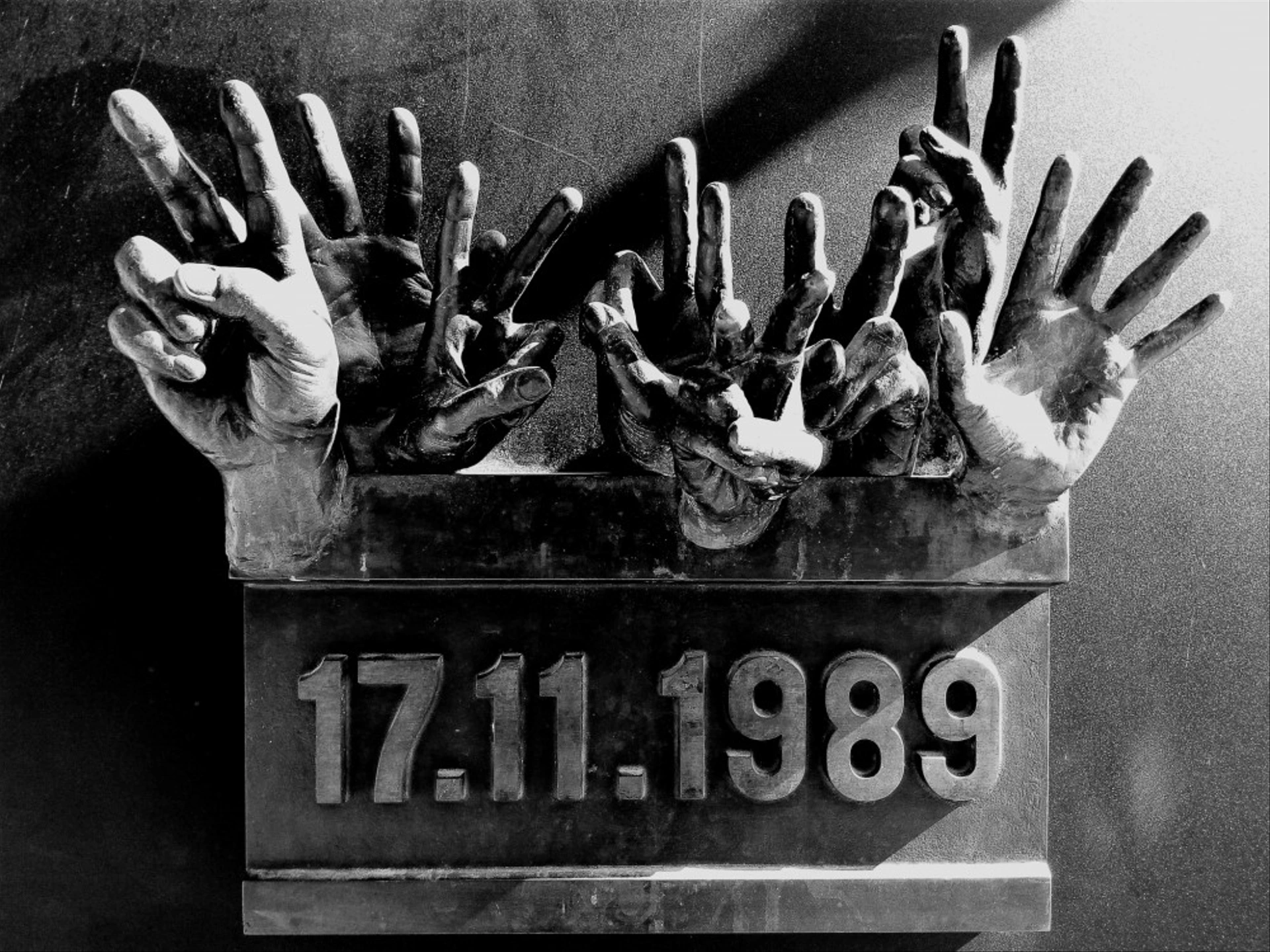
On 17 November 1939 the Nazis executed nine Czech students. Fifty years later students marched to remember them and brought down the regime. Why Czechs and Slovaks still stop at 17:11.
One date, fifty years apart
On 17 November 1939, the Nazis executed nine Czech students and closed every Czech university. On 17 November 1989, students marched to remember them, were beaten by riot police on Národní třída, and within six weeks the communist regime was gone.
That is not a coincidence. The 1989 march was legal precisely because it commemorated 1939, the one date the regime could not refuse students.
It is the only Czech national holiday that belongs to students, and some of the people around you on Národní třída this year were in that crowd. So why does the whole country sing at 17:11?
1938: Munich, and the phrase every Czech knows
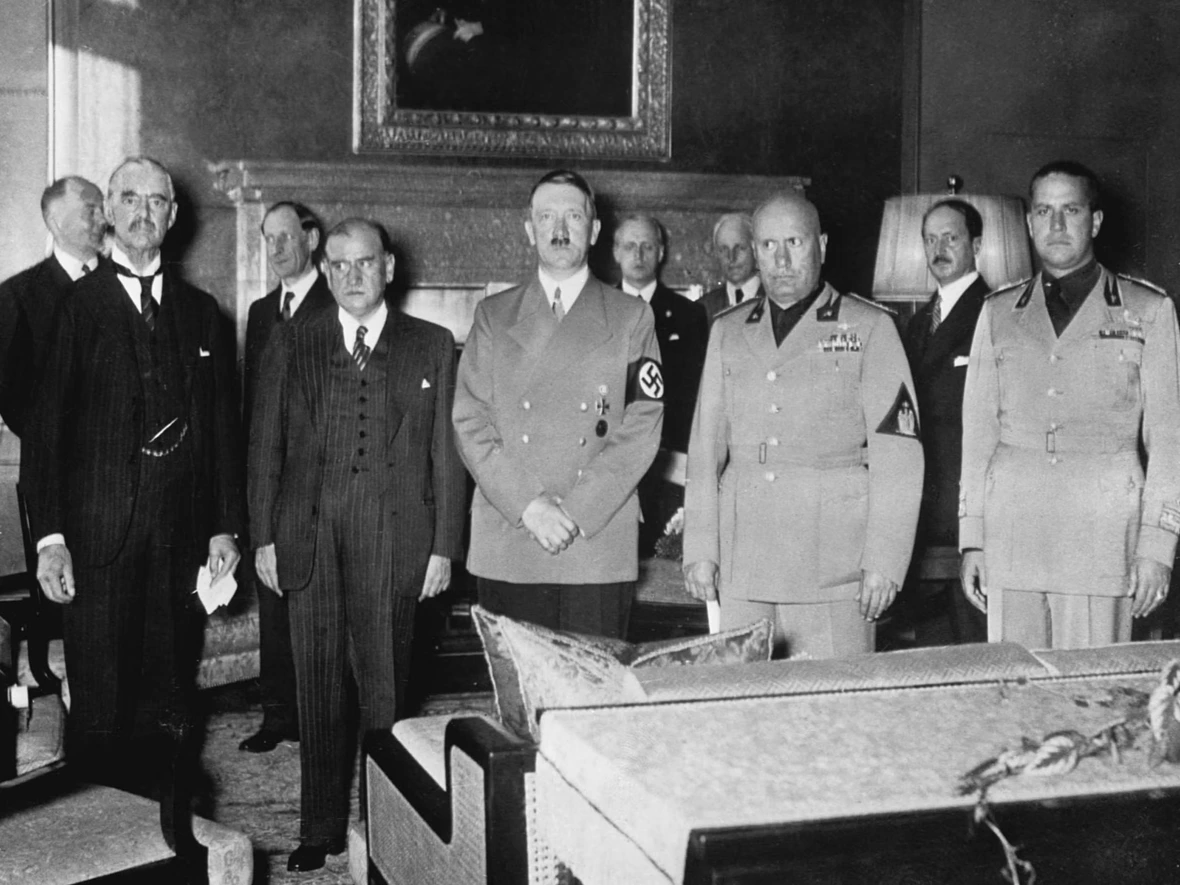
In September 1938 Hitler demanded the Sudetenland, the border regions where most of Czechoslovakia's ethnic Germans lived. Britain and France were trying to avoid another war. On 30 September, Chamberlain, Daladier, Hitler and Mussolini signed the Munich Agreement handing those regions to Germany. Czechoslovakia was not invited and not consulted, then left to accept the result or face Germany alone.
In Czechia we call it the Munich Betrayal, and the phrase that goes with it is o nás bez nás: about us, without us. It is one of the few political phrases almost all of us can quote, and it still comes up whenever someone's future is decided without them in the room.
Chamberlain believed he was preventing a war, and hindsight makes everyone wiser. But the country being traded away was not weak. It had a treaty with France, a fortified mountain border and a modern army, and when it mobilised a million men reported for duty within a day. Munich handed over the fortifications without a shot fired. Five months later Germany took the rest anyway, and Czech-built tanks went on to fight in Poland and France on the German side.
1939: the students the Nazis tried to erase
By the spring of 1939 the country no longer existed. Slovakia had declared independence under German protection, and what was left of the Czech lands was the Protectorate of Bohemia and Moravia.
On 28 October 1939, Czechs marked what should have been Independence Day, the anniversary of the 1918 republic. Prague filled with demonstrators. The authorities opened fire and a medical student named Jan Opletal was shot. He died on 11 November.
His funeral on 15 November was supposed to be a quiet procession before his body was taken home to Moravia. Thousands of students came. It turned into the largest anti-Nazi demonstration the Protectorate had seen.
The reprisal came two days later. On 17 November 1939, the Nazis executed nine students and student leaders in Prague without any trial, arrested more than 1,200 and deported them to Sachsenhausen concentration camp, and closed every Czech university and college. The closure lasted for the rest of the war. An entire generation lost its education.
The point was to make an example of students. It had the opposite effect: in 1941 students from fourteen countries named 17 November International Students' Day. It is marked around the world, and it started here.
1948: liberation, then a different occupation
The war ended, Czechoslovakia was put back together with Czechs and Slovaks in one state again, and the universities reopened. Within three years the country was unfree once more, this time from the other direction.
In February 1948 the Communist Party took full power in a crisis still argued about: part coup, part collapse of the democratic parties. Czechoslovakia had been the only functioning democracy in Central Europe between the wars, which is a large part of why losing it stung so badly.
The 1950s were the hardest years. Show trials were scripted in advance, with defendants made to memorise their confessions.
Milada Horáková, a democratic politician who had survived Nazi imprisonment, was executed in June 1950. In 1952 the party hanged its own general secretary. Several hundred people were executed for political offences, and thousands more went to prisons and labour camps, including the uranium mines at Jáchymov.
Ordinary life was quieter but still narrow. Travel to the West was effectively impossible for most people. What you could study, where you could work, and whether your children got into university depended on your family's political record.
The secret police, the StB, ran a network of registered informers that still numbered about 30,000 people in 1989. You never knew which neighbour or colleague was filing reports, which was rather the point.
This is the part that is hardest to picture from the outside. It was not forty years of grey architecture and queues. It was forty years of being watched.
1968: the Prague Spring, and the year that explains the bitterness
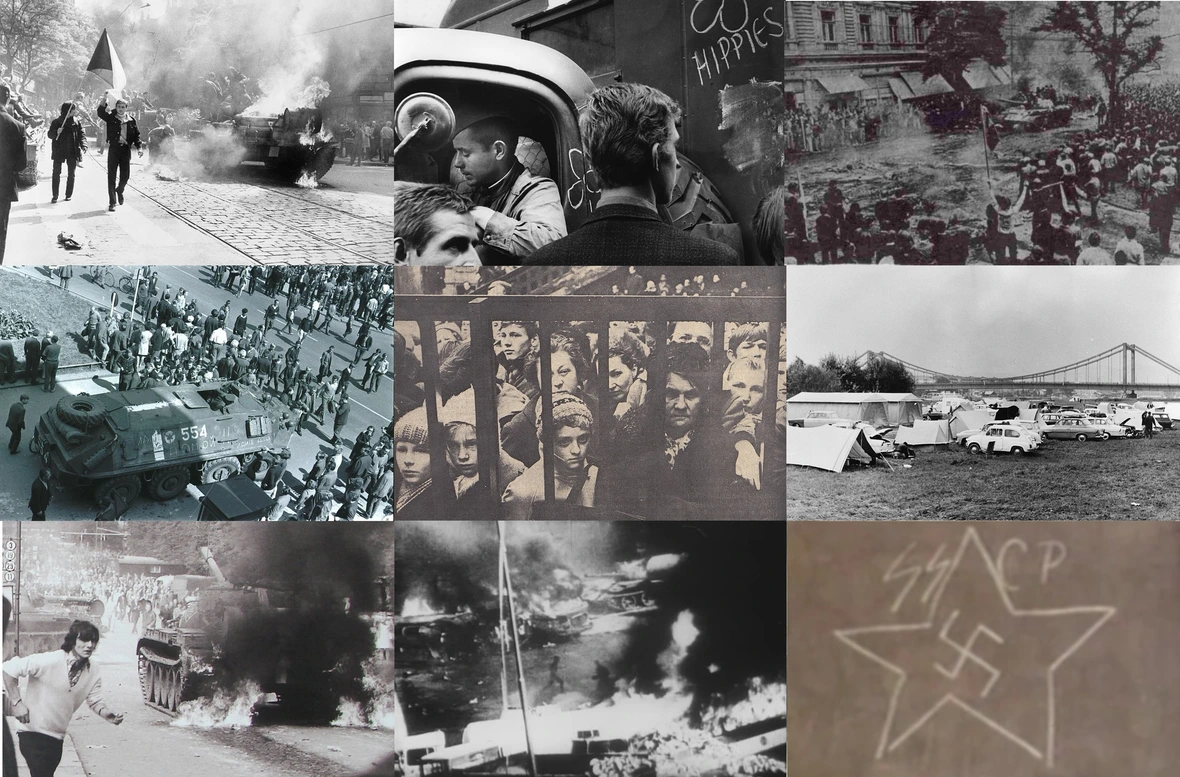
To understand how 1989 felt, you need 1968.
In January 1968 the party chose a new leader: Alexander Dubček, a Slovak who had led the party in Slovakia. He began dismantling the worst of the system from the inside. Censorship was lifted, travel loosened, and people started saying in public what they had only said at home. He called the programme socialism with a human face.
Those few months became known everywhere as the Prague Spring, and they matter to us in a way outsiders often miss. It was not a demand to become Western, but an attempt to make the existing system humane from within. It was crushed anyway.
On the night of 20 to 21 August 1968, Soviet, Polish, Hungarian and Bulgarian troops invaded, around 165,000 of them on the first night. There was no armed resistance, because resistance would have been suicide. People argued with tank crews in the street, turned road signs around to confuse them, and painted over house numbers. In the invasion and the months after it, 108 people were killed.
One of them was Marie Charousková, 25, finishing an engineering degree while raising a two-year-old son. Soviet soldiers standing beside a tank at Klárov shot her without warning. By some accounts she had reached for her umbrella and a soldier took the movement for a threat. She died that afternoon.
The policeman who gave her first aid filed an honest report, refused to rewrite it as self-defence, and was thrown out of the force. Soviet propaganda called her death an invention of illegal radio. Students paid for a plaque at Klárov, the authorities removed it in 1970, and students put it back after 1989.
Another was Milan Lamper, 19, from Slovakia, shot outside the radio building while the staff inside kept broadcasting. Most of the 108 were like them: young, unarmed, and in the street because staying at home felt worse.
Dubček was flown to Moscow, pressured into signing away the reforms, and eventually removed and given a job in forestry. Around 300,000 people left the country for good.
On 16 January 1969, a student named Jan Palach set himself on fire at the top of Wenceslas Square in protest, not at the invasion itself but at how quickly people were accepting it. He died three days later. There is a memorial to him on the pavement there, and you will walk over it on 17 November.
What followed was two decades officially called normalisation. Anyone who had supported the reforms lost their job. Academics became window cleaners and boiler operators. It was quieter than the 1950s and in some ways more corrosive: a deal in which you kept your job and your flat as long as you said nothing. Most people took it, because the alternative was ruining your children's future.
The 1980s: cracks before the break
Nothing about November 1989 came from nowhere. The pressure had been building for over a decade, and a lot of it came from Slovakia.
In 1977 a few hundred people signed Charter 77, a document pointing out that the regime was violating human rights agreements it had signed itself. Signing cost people their jobs and brought interrogations and prison. One of the spokesmen was a playwright called Václav Havel. By 1989 the Charter had around 1,900 signatories in a country of fifteen million, which tells you what it cost.
On 25 March 1988, something larger happened in Bratislava. Around 11,000 people gathered on Hviezdoslav Square with candles, to demand religious freedom and civil rights. It was the first mass protest against the regime since 1969. Police responded with water cannon and batons. The candle demonstration is now commemorated in Slovakia every 25 March as Struggle for Human Rights Day, and it is the moment many Slovaks point to as the real beginning of the end.
Meanwhile the bloc was coming apart. Gorbachev was reforming the Soviet Union itself, Poland and Hungary were already pulling away, and the Berlin Wall fell on 9 November 1989.
That last date matters. When Czechoslovak students gathered eight days later, everyone knew the ground had shifted.
17 November 1989: six weeks from a beating to a free country
The march was legal. The official communist youth organisation had approved a commemoration of the fiftieth anniversary of 1939, which is exactly why students chose it: the regime could not ban its own memorial to murdered students. It set off from Albertov and went to Vyšehrad cemetery. That was the sanctioned part. Then around 15,000 people turned towards the centre instead, chanting against the regime.
On Národní třída, riot police sealed both ends of the street and beat the crowd. 568 people were injured. Students sat down and held up their empty hands. The arcade where it happened now holds a bronze memorial of raised hands, and people leave candles there every year.
A rumour spread that a student had been killed. It was false, but it travelled fast, and it brought out people who had spent twenty years deciding it was safer to stay home.
Then it moved extraordinarily quickly:
- 17 Nov: Students and actors call a strike, and theatres across the country join them
- 19 Nov: Civic Forum is founded in Prague, with Public Against Violence following in Bratislava
- 20 Nov: Protests in Prague reach an estimated half a million people
- 23 Nov: Dubček speaks to the crowd in Bratislava, back in public after twenty years
- 24 Nov: The entire communist leadership resigns
- 25–26 Nov: Between 750,000 and 800,000 people fill Letná, close to the entire population of Prague at the time
- 27 Nov: A two-hour general strike, backed by around three quarters of the country
- 29 Nov: Parliament votes to delete the Communist Party's leading role from the constitution
- 29 Dec: Václav Havel, imprisoned earlier that same year, is elected president
My father is somewhere in that timeline. He spent those weeks driving around the country with leaflets in the car, calling people out onto the streets, because the television and the newspapers still belonged to the regime and somebody had to carry the news physically.
He was on Letná for the big ones. He describes the crowd afterwards coming down off the hill and moving through the city in a line that went on for kilometres, strangers linking up with strangers, through streets that had been silent for twenty years.
Forty-one years of one-party rule ended in six weeks, with no one killed. That is why it is called velvet.
It is worth sitting with how improbable that was. In 1939 students were shot and deported. In 1968 tanks came. In 1989 the same instinct produced a government instead of a massacre, and the man who ended the year as president had begun it in a prison cell.
Why both nations still keep the day
Czechoslovakia split peacefully on 1 January 1993. Both countries kept 17 November.
In Czechia it is Den boje za svobodu a demokracii, Struggle for Freedom and Democracy Day, a full public holiday. In Slovakia it is Deň boja za slobodu a demokraciu, the same name in Slovak. The two countries even name the revolution differently: sametová revoluce, the velvet revolution, in Czech, and nežná revolúcia, the gentle revolution, in Slovak.
The shared ownership is real: Dubček was Slovak, the Bratislava candle demonstration came eighteen months before Národní třída, and the two movements that ended the regime, Civic Forum in Prague and Public Against Violence in Bratislava, were founded within a day of each other. When Havel became president, Dubček became speaker of parliament.
What makes the day emotional rather than merely historical is how recent it is. Your Czech or Slovak lecturer was probably a student in 1989. Your landlord queued for bananas. Plenty of people now in their sixties had never set foot in Western Europe before they were in their twenties. Life has not been easy for them.
It is also not a settled, comfortable anniversary. Every year the day draws protests as well as commemorations, and arguments about whether the promises of 1989 were kept. That is part of what it means. A day about the right to demonstrate is a strange thing to celebrate quietly.
The one ritual that unites almost everyone is a song. Modlitba pro Martu, A Prayer for Marta, was recorded by Marta Kubišová in 1968. She was banned from performing in 1970 and spent nearly twenty years out of public life. On 22 November 1989 she sang one verse from a balcony above Wenceslas Square to a crowd of 200,000, unaccompanied. Every 17 November at 17:11, the country sings it at the same minute.
How to spend the day in Prague
You do not need to be Czech to take part, and nobody will think you are intruding. Students are the point of the day.
Národní třída is where to go. The arcade at number 16 holds the memorial of raised hands, and by evening it is covered in candles and flowers. The street fills with open-air exhibitions, music and debates. Bring a candle if you want to leave one.
17:11 is the moment worth being there for. Modlitba pro Martu is sung across the country at that minute, in squares, in pubs, on trams. You will not know the words. Stand quietly and let it happen. It lasts about three minutes and it is the single most moving thing you will see here.
Wenceslas Square is the other site, with Jan Palach's memorial at the top and the balconies the 1989 speeches were given from. There is usually a free concert in the lower square in the evening.
A few practical things. The mood shifts through the day, reflective in the afternoon and more festive after dark. Many museums open free, and crowds are large, so agree a meeting point in advance.
Protest marches are a normal part of it, and you may pass demonstrations with very different politics, which is rather the point.
And if you get the chance, ask any Czech or Slovak over fifty where they were in November 1989. Almost all of them have an answer, and most are happy to tell you.